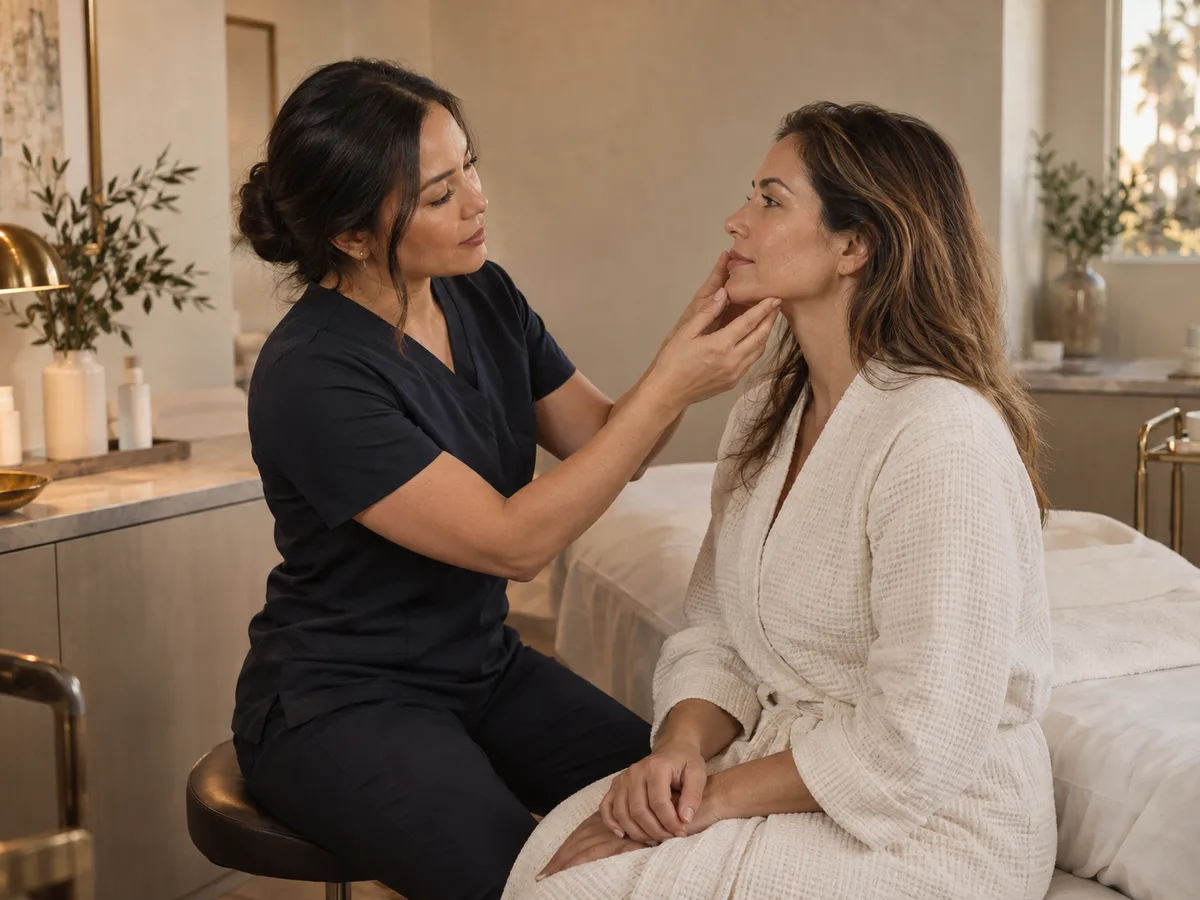
Pressure is the one thing the aftercare sheet is most insistent about, for good reason: the barbs have engaged tissue but have not yet fixed in place, and pushing on the face can shift a thread.
Eating is awkward. Soft food, small bites, minimal chewing. Soup, yoghurt, eggs, anything that does not demand a wide mouth or a working jaw.
Chewing gum is out for weeks, not days.
The first night
Sleep on your back with your head raised on two or three pillows. Some readers build a barrier of cushions on either side to stop themselves rolling. A travel pillow works.
This is the single most repeated piece of advice we hear from people a month out, usually phrased as "I wish I had taken the pillow thing seriously".
Expect broken sleep. The pulling sensation is more noticeable when you are lying still with nothing to distract you. Many people describe the first night as the low point.
Day one
Swelling is building. The face looks fuller and a little uneven, often more so on one side. This is ordinary, and asymmetry in swelling does not mean the result will be asymmetric.
Bruising, if it is going to appear, begins to show along the thread paths and around entry points.
The odd sensation on smiling or talking is at its peak around now. Facial expressions feel restricted. Some people describe a mild tugging when they open their mouth to speak.
Keep expressions small. Laugh with your eyes.
Keep the entry points clean according to the instructions you were given. Do not apply makeup over them until told you can. Avoid touching your face out of habit, which is harder than it sounds.
The allied health programme at East Los Angeles College publishes plain-language wound care material that several readers found useful for the entry points, with the usual caveat that it is general and your practitioner's instructions are specific.
Day two
For most people this is the peak of swelling. It can be disheartening, because the face looks puffier than it did the day before and nothing like the result you were shown. Give it time.
Swelling starts to recede from here in most cases.
Bruises are darkening. They can track in surprising directions along tissue planes, sometimes appearing lower on the neck than the threads themselves. That is fluid following gravity, not a problem.
Tightness is easing slightly. The face is still restricted. Chewing is still off the menu in any serious form.
Small tasks are fine. A slow walk in the shade, a film, a quiet museum. Readers recovering in the city have recommended The Broad downtown for exactly this, since the galleries are dim, the pace is slow and nobody looks at anyone's jawline.
MOCA, across the street, is much the same. A bright beach day is the opposite of what you want, both for the swelling and for the pigment risk around fresh entry points.
Day three
Swelling is beginning to settle, though the face is not yet at its final shape. Bruises are moving toward yellow. The pulling sensation is still present but is becoming background rather than foreground.
Many people feel presentable enough for a quiet errand with a hat and sunglasses.
Some new sensations may appear around now: an occasional twinge along a thread path, a feeling of a small ridge under the skin when you move, a mild dimple at an entry point.
Ridges and dimples usually soften over the following weeks as the tissue relaxes around the thread. They are worth mentioning at your follow-up. They are not, on their own, a reason to panic.
Small things that make the three days easier
Prepare food before the procedure. Cooking with a swollen, numb face while forbidden to chew is miserable.
Put the practitioner's after-hours number somewhere obvious. On the fridge, in your phone favourites, both.
Keep your head up when bending. Reach down by bending your knees, not your neck.
Skip alcohol. It dilates vessels and worsens swelling and bruising.
Stay hydrated. Los Angeles tap water is regulated by the state and the county. The sanitation and water agencies, such as the county's Sanitation Districts, publish their quality reports for anyone who wants to read them.
Bottled water is not a recovery requirement.
Resist the mirror. Checking every hour makes the swelling feel worse than it is.
Work, children and the rest of life
The three days do not happen in a vacuum. A few practical notes from readers who had to keep life running.
Desk work from home is manageable from day one if you can avoid video calls. Video calls are manageable from day three with a lamp behind the camera and a high collar.
In-person meetings are a day-four or day-five proposition for most people, later if you bruise heavily.
Small children are the hardest variable. They grab faces. They headbutt.
They want to be lifted, which means bending and straining. If you can arrange help for the first three days, do. If you cannot, explain that your face is "sore" and keep a cushion between you on the sofa.
Cooking, as mentioned, is miserable. Batch cook before, or accept that this is a week of delivery soup.
Driving is fine once the numbness has gone and you feel alert, usually the next day. Turning your head to check a blind spot pulls on neck and jaw threads, so give it an extra day if you can. The freeways will still be there.
Exercise is out for a week. A slow walk in the shade is in.
The Broad and the museums downtown are walkable from the Metro if you would rather not drive at all, and the sidewalks on Grand Avenue are wide enough that nobody brushes past your face.
Dogs are underestimated. A large dog on a lead that lunges at a squirrel can jolt the whole upper body. Shorten the lead or hand the walk to someone else for a few days.
What is not ordinary
Most of the seventy-two hours is unremarkable. A short list is not. Pain that is increasing rather than easing after day one.
Redness that is spreading rather than fading. Warmth, discharge or a bad smell at an entry point. Fever.
A thread visible at the surface of the skin. Sudden severe swelling on one side. Any of these means a phone call to the practitioner that day, not a wait until the follow-up.
Our guide on when to call the provider goes into more detail.
Where this leaves you
By the end of day three, the strangeness has usually settled into a routine. The face is swollen but improving, restricted but working, bruised but fading.
The next two weeks are about not disturbing what has been done: soft food, back sleeping, small expressions, no facials, no gym, no sun.
In local use, the local signal is how the clinic behaves during these three days. A practice that checks in, answers the phone and treats a question about a dimple as reasonable is a different kind of practice from one that goes quiet after payment.
If you are still choosing between providers, that difference is worth more than any brochure.
A reader comparing options in Los Angeles could put a question about post-procedure contact to every clinic they are considering and weigh the answer alongside price and credentials.
You have been through the hardest part. The rest is patience.